What is a commercial door? This is a common question for business owners, property managers, and anyone responsible for a commercial space. A commercial door is more than just an entryway it’s a key part of any business or public building. It provides security, helps control access, and can even shape the first impression people get of your business. In this article, we’ll explain what a commercial door is, the different types available, their key features, and why choosing the right one matters for your business.
What Is a Commercial Door?
A commercial door is a door designed specifically for use in business, industrial, or public settings. Unlike residential doors, commercial doors are built to handle heavy use, meet strict safety standards, and provide extra security. They are found in places like offices, stores, warehouses, schools, hospitals, and factories.
Why Are Commercial Doors Important?
Commercial doors do more than just open and close. Here’s why they matter:
- Security: They protect your building, assets, and people from unauthorized access or break-ins.
- Safety: Many commercial doors are fire-rated or built to help people exit quickly during emergencies.
- Durability: These doors are made to withstand frequent use and harsh conditions, lasting longer than regular doors.
- Energy Efficiency: Properly insulated commercial doors help control heating and cooling costs by keeping outside air out.
- Aesthetics: The right door can make your business look more professional and welcoming.
- Compliance: Commercial doors must meet building codes for safety, accessibility, and fire protection.
Key Features of Commercial Doors
Commercial doors have several features that set them apart from regular doors:
- Heavy-Duty Materials: Common materials include steel, aluminum, fiberglass, and sometimes glass or wood.
- Special Hardware: Stronger locks, automatic closers, panic bars, and reinforced hinges are standard.
- Fire Ratings: Many commercial doors are rated to withstand fire for a certain period, helping to slow the spread of flames.
- Accessibility: They must be easy to open for everyone, including people with disabilities, as required by law.
- Weatherproofing: Weatherstripping and thresholds help keep out wind, rain, and dust.
Parts of a Commercial Door
Understanding the anatomy of a commercial door helps you make better choices. Here are the main parts:
| Part | Description |
| Door Leaf | The main swinging part, made from steel, aluminum, glass, wood, or fiberglass |
| Frame | The structure that holds the door in place and attaches it to the wall |
| Hinges | Allow the door to swing open and closed |
| Hardware | Includes locks, handles, closers, and panic bars |
| Weatherstripping | Seals gaps to prevent air and water leaks |
| Threshold | The strip at the bottom of the door for sealing and durability |
| Vision Lites | Glass panels for visibility and light |
| Louvers | Vents for air flow, often used in utility rooms |
Types of Commercial Doors
There are many types of commercial doors, each suited for different needs:
| Type | Best For | Key Features |
|---|---|---|
| Hollow Metal Doors | Warehouses, factories | Strong, durable, secure, fire-rated options |
| Aluminum Doors | Storefronts, offices | Lightweight, corrosion-resistant, modern look |
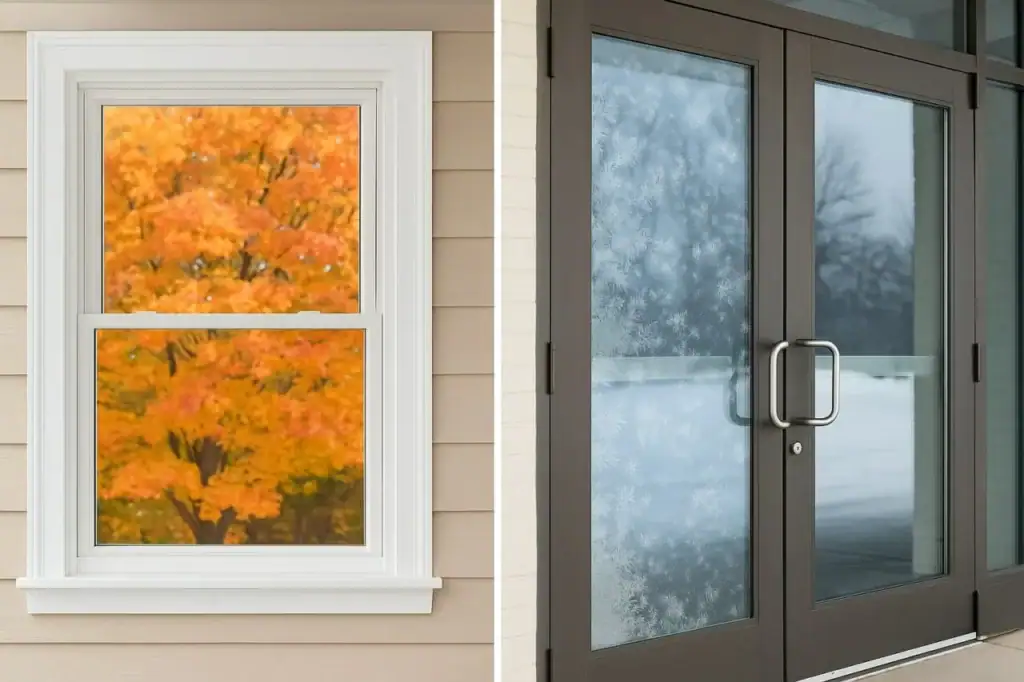
| Glass Doors | Retail, offices | Stylish, allows light, can be tempered or laminated |
| Wood Doors | Office interiors | Classic look, many finishes, less secure |
| Roll-Up Doors | Garages, warehouses | Space-saving, easy for large openings |
| Fire-Rated Doors | Exits, stairwells, corridors | Slows fire, required by code in many buildings |
Common Materials Used
Commercial doors are made from different materials, each suited for specific needs:
- Steel: Strong and secure, ideal for exterior doors and high-security areas.
- Aluminum: Lightweight, rust-resistant, and great for storefronts.
- Glass: Enhances visibility and style; uses tempered or laminated glass for safety.
- Wood: Best for interior doors where appearance matters.
- Fiberglass: Durable and low-maintenance, perfect for harsh weather.
When considering what is a commercial door made of, it’s clear that material choice significantly impacts performance, security, and longevity.
Choosing the Right Commercial Door
Start by identifying your priorities. If security is critical, steel doors offer strength and protection. For a sleek, modern appearance, aluminum or glass doors work best, while fire-rated doors are essential in areas like stairwells or exits. Location also matters: exterior doors need weatherproof materials, while interior doors can prioritize design. High-traffic zones require heavy-duty hardware to handle constant use. Always verify local safety codes and balance upfront costs with long-term durability to avoid costly replacements.
When selecting a door, think about daily use and compliance. A retail store might need glass for visibility, while a warehouse requires sturdy steel. Fire safety codes often dictate specific materials for certain areas, so consult experts like Doorway Dynamics to ensure compliance. Budget-conscious buyers should invest in quality upfront to reduce maintenance costs later. The right door combines function, safety, and style to meet your business needs.
Maintenance and Longevity
Regular upkeep keeps commercial doors functioning smoothly. Clean aluminum or glass with mild soap and water to prevent damage, and inspect hinges, locks, and weatherstripping monthly. Addressing minor issues like sticking hinges or squeaky tracks early prevents larger repairs. For example, replacing worn seals improves energy efficiency, while lubricating hardware reduces wear.
For complex problems, rely on professionals. Doorway Dynamics can handle fire-door inspections, code compliance checks, and major repairs. Their expertise ensures doors meet safety standards and operate reliably. Consistent maintenance extends a door’s lifespan, protects your investment, and minimizes disruptions to daily operations. Simple habits like prompt repairs and professional servicing keep your business secure and compliant.
Why Choose Doorway Dynamics for Your Commercial Doors?
If you’re in Calgary or nearby areas, Doorway Dynamics offers expert commercial door repair, installation, and maintenance. Their team handles all types of commercial doors, including aluminum, glass, and fire-rated doors. They focus on quality, safety, and customer satisfaction, ensuring your business stays secure and up to code.
Conclusion
A commercial door is a crucial part of any business or public building. It provides security, safety, and a professional appearance while meeting strict codes and standing up to heavy use.
Knowing what is a commercial door empowers you to make better choices that protect your business, save energy, and create a strong first impression. Choosing the right commercial door and keeping it well maintained protects your business, saves energy, and creates a great first impression for everyone who walks through it.
Frequently Asked Questions
- Are commercial doors more expensive than residential doors?
– Yes, because they use stronger materials, special hardware, and must meet strict codes. - Do all exterior commercial doors need to be fire-rated?
– Most do, especially in public buildings, to comply with fire safety codes. - How do I choose the right commercial door for my business?
– Choosing the right commercial door depends on your needs and where the door will be used. Consider if the door is for an interior or exterior location, the amount of traffic it will handle, and if it needs special features like fire ratings or extra security. For example, exterior doors should be more weather-resistant and secure, while interior doors can focus more on appearance and style. - Can commercial doors be customized?
– Yes, you can choose different materials, finishes, sizes, and hardware to fit your needs. - What kind of maintenance do commercial doors need?
– Commercial doors need regular maintenance to keep working well. This includes cleaning, checking hinges and locks, and fixing small problems like squeaks or misalignment. Some doors may need occasional repainting or new weatherstripping. Choosing a durable material and scheduling regular checks can help your door last longer